Mastering New Skills on a Budget: The Best Free Resources for Development
In today’s rapidly evolving world, the ability to continuously learn and adapt is paramount. Whether you’re looking to advance your career, explore a new passion, or simply broaden your horizons, mastering new skills is an investment that always pays off. However, the perceived cost of education can often be a barrier. Fortunately, a wealth of free resources exists, democratizing skill development and making quality learning accessible to everyone. This article will guide you through the treasure trove of no-cost options available, proving that a rich education doesn’t have to come with a hefty price tag.
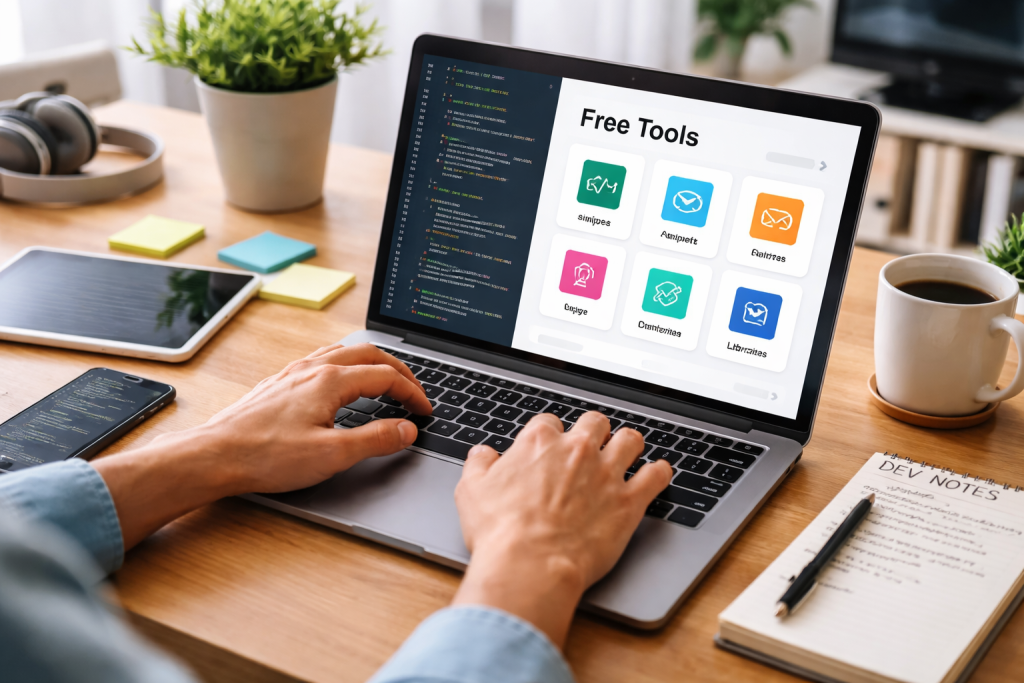
The internet has revolutionized access to education, giving rise to numerous platforms that offer high-quality learning experiences without requiring a dime. These platforms often collaborate with universities and industry leaders, bringing expert knowledge directly to your screen.
Contents
- 1 Exploring Massively Open Online Courses (MOOCs)
- 2 Navigating Specialized Learning Hubs
- 3 Discovering Digital Libraries and Repositories
- 4 Utilizing Creative Commons Licensed Content
- 5 Participating in Live Online Events
- 6 Exploring Community-Driven Learning Sessions
- 7 Mastering Essential Development Environments
- 8 Exploring Creativity and Productivity Software
- 9 Delving into Free Ebook Libraries and Archives
- 10 Following Online Tutorials and Blog Posts
- 11 Immersing in Audio Learning: Podcasts and Audio Resources
- 12 Discovering Educational Podcasts
- 13 Utilizing Free Audiobooks and Language Learning Apps
Exploring Massively Open Online Courses (MOOCs)
MOOCs are perhaps the most well-known free educational resource. Platforms like Coursera, edX, and FutureLearn offer a vast array of courses from renowned universities and organizations worldwide. You can find everything from introductory programming to advanced psychology, often with accompanying assignments, quizzes, and discussion forums. While verified certificates usually come with a fee, the core learning content, including lectures, readings, and exercises, is almost always free to audit. This allows you to learn more about a subject without the financial commitment. The sheer breadth of topics available means there’s something for everyone, regardless of their current skill set or desired area of growth.
Beyond the major MOOC providers, a multitude of specialized platforms cater to specific skill sets. For instance, Khan Academy offers comprehensive lessons across a wide range of academic subjects, from mathematics and science to arts and humanities, presented in an engaging and accessible format. Codecademy focuses specifically on coding and programming languages, providing interactive tutorials that allow you to learn by doing. FreeCodeCamp offers structured learning paths to becoming a full-stack developer, including projects and certifications. These specialized platforms often provide a more tailored and immersive learning experience for those focused on particular technical or academic domains.
Open Educational Resources (OER) represent a powerful paradigm shift in education. Anyone can use, adapt, and redistribute these freely accessible, openly licensed instructional materials. OER goes beyond isolated courses, offering complete textbooks, syllabi, lecture notes, assignments, and even entire degree programs.
Discovering Digital Libraries and Repositories
Many universities and educational institutions publish their course materials as OER. MIT OpenCourseWare is a pioneering example, offering nearly all of MIT’s course content online for free. Similarly, OpenStax provides peer-reviewed, openly licensed college textbooks for various subjects. These resources are an invaluable alternative to expensive textbooks, providing rigorous academic content without the cost. They are often regularly updated and peer-reviewed, ensuring high quality and relevance. The beauty of OER lies in its flexibility; you can pick and choose relevant sections, integrate them into your personal learning plan, or even remix them for your teaching or personal projects.
Utilizing Creative Commons Licensed Content
Creative Commons licenses govern the use of a significant portion of OER. Understanding these licenses allows you to effectively leverage and even contribute to the open knowledge ecosystem. The term also extends to platforms like YouTube, where many educators and experts share their knowledge under Creative Commons licenses, making their videos a rich source of learning. By searching for content with specific Creative Commons attributes, you can find high-quality educational videos that you can legally incorporate into your learning journey.
Direct interaction with industry professionals can accelerate your learning and provide invaluable insights. Many organizations and individual experts offer free webinars and workshops, providing a low-barrier way to tap into specialized knowledge.
Participating in Live Online Events
Observe industry associations, professional organizations, and even companies in your desired field. They frequently host free webinars on emerging trends, new technologies, and practical skill development. These live sessions often include Q&A opportunities, allowing you to get direct answers to your questions from the experts. The interactive nature of webinars promotes a sense of belonging and allows for real-time engagement with the material and the presenter. Even if you can’t attend live, many organizations record these sessions and make them available on demand.
Exploring Community-Driven Learning Sessions
Meetup groups and online communities often organize free workshops and hackathons, particularly in the tech and creative fields. These events provide a hands-on learning environment where you can practice new skills, collaborate with others, and receive feedback from experienced mentors. These less formal settings can be incredibly beneficial for practical application and networking. They offer a less intimidating environment to experiment and learn from your peers, fostering a collaborative learning experience.
For those looking to develop technical skills, the open-source movement offers an unparalleled advantage. Collaboratively developed and freely available, open-source software offers a fully functional and often superior alternative to expensive proprietary tools.
Mastering Essential Development Environments
For aspiring programmers, editors like VS Code and IDEs like Eclipse are powerful, free, and open-source. Learning to navigate these environments is a fundamental skill that costs nothing. Similarly, version control systems like Git and platforms like GitHub and GitLab are essential for collaborative development and are entirely free to use for public repositories. These tools are the backbone of modern software development, and mastering them provides a strong foundation for any technical career.
Exploring Creativity and Productivity Software
Beyond coding, open-source alternatives abound for various creative and productivity tasks. GIMP and Krita offer robust image editing capabilities comparable to paid alternatives. Inkscape is a powerful vector graphics editor, while Blender is a professional-grade 3D creation suite. LibreOffice provides a comprehensive suite of office applications, including word processing, spreadsheets, and presentations. By embracing these tools, you can explore new creative avenues and enhance your productivity without incurring any software licensing fees. The active communities behind these projects often provide extensive documentation, tutorials, and support, further enhancing their value.
The written word remains a powerful medium for learning, and a vast library of free articles, ebooks, and detailed tutorials awaits those eager to expand their knowledge. These resources offer in-depth explanations, practical guidance, and theoretical frameworks.
Delving into Free Ebook Libraries and Archives
Google Books and Project Gutenberg offer millions of free ebooks, ranging from classic literature to academic texts. Websites like Leanpub often have free introductory ebooks on various technical subjects. Many authors and publishers also make their work freely available as a way to reach a wider audience or to promote their paid offerings. You can find comprehensive guides on almost any topic imaginable within these digital libraries, allowing for self-paced, in-depth study.
Following Online Tutorials and Blog Posts
For practical, step-by-step guidance, free online tutorials are invaluable. Websites like wikiHow, Instructables, and countless individual blogs offer detailed instructions on everything from fixing a leaky faucet to mastering a new software feature. These tutorials often include screenshots, videos, and user comments, providing a rich and interactive learning experience. Many developers and creators share their expertise through blog posts and articles, offering insights, best practices, and solutions to common problems. Simply searching for “how to [skill]” will often yield a wealth of free, high-quality instructional content. They are excellent for specific, task-oriented learning.
Immersing in Audio Learning: Podcasts and Audio Resources
For those who prefer learning on the go or while multitasking, podcasts and other audio resources offer a convenient and effective way to absorb new information.
Discovering Educational Podcasts
The podcast universe is brimming with educational content covering nearly every conceivable topic. From history and science to business and personal development, there’s a podcast for every interest. Many experts and educators host podcasts, sharing their knowledge in an engaging and accessible format. Platforms like Spotify, Apple Podcasts, and Google Podcasts offer free access to millions of episodes. This feature allows you to turn commute times, workouts, or household chores into valuable learning opportunities.
Utilizing Free Audiobooks and Language Learning Apps
Beyond podcasts, many public libraries offer free access to audiobooks through apps like Libby or Hoopla with a library card. Additionally, free language learning apps like Duolingo provide gamified, interactive lessons to help you master a new language on a budget. These audio-centric resources cater to different learning styles and offer flexibility in how and where you acquire new skills. The repetition and immersion offered by audio resources can be particularly effective for language acquisition.
In conclusion, financial constraints no longer limit the pursuit of knowledge and skill mastery. With a proactive approach and a willingness to explore the vast landscape of free resources, anyone can embark on a journey of continuous learning and personal development. From the structured courses of MOOCs to the practical guidance of open-source tools and the insightful discussions of podcasts, the opportunities are limitless. Embrace these free avenues to unlock your full potential without any financial burden.

Fit Text Graphics is the creator of SkillNexy, a platform focused on helping people learn valuable skills and grow in their careers. SkillNexy’s mission is to make skill development simple, practical, and accessible for everyone.