
Maximize Your Efficiency with These Must-Have Time Tracking Apps
In today’s fast-paced world, where demands for our time seem to multiply exponentially, the ability to manage and optimise our daily schedules has become paramount. Whether you’re a busy professional juggling multiple projects, a student striving for academic excellence, or a freelancer navigating various client demands, understanding where your time actually goes is the first step toward greater productivity and reduced stress. Time-tracking apps provide a powerful solution to regain control over your most valuable asset: time.
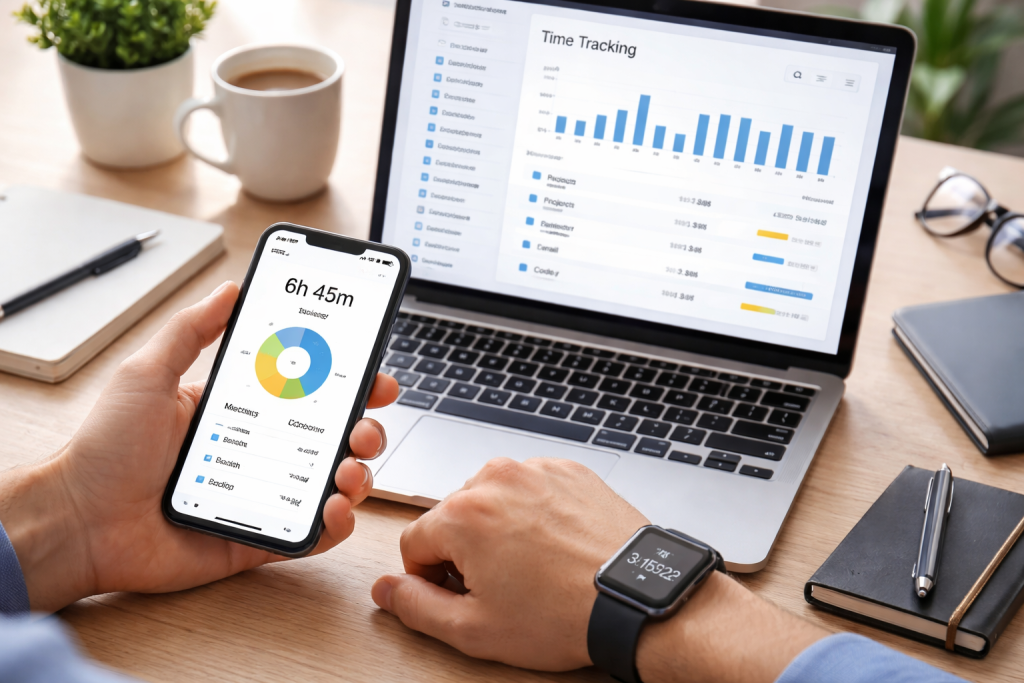
At its core, a time tracking app is a digital tool designed to record and analyse time spent on different tasks, activities, or projects. From simple timers to sophisticated platforms with advanced reporting features, these applications provide a granular view of your work habits. They operate on various platforms, including desktop, web, and mobile, ensuring accessibility wherever your work takes you. The fundamental principle is straightforward: you start a timer when you begin a task and stop it when you finish, or in some cases, the app automatically tracks your computer usage and categorises activities. This data, once collected, offers invaluable insights into your productivity patterns, helping you identify areas for improvement and opportunities for optimisation.
Contents
- 1 Understanding the Core Functionality
- 2 The Evolution of Time Management
- 3 Enhanced Productivity and Focus
- 4 Improved Project Management and Estimation
- 5 Better Billing and Financial Management
- 6 Reduced Stress and Burnout
- 7 Toggl Track: Simplicity Meets Robustness
- 8 Clockify: The Free Powerhouse
- 9 RescueTime: Automated Insight
- 10 Start Small and Build Habits
- 11 Leverage Integrations and Automation
- 12 Regularly Review and Analyze Data
- 13 Streamlining Client Billing and Invoicing
- 14 Managing Multiple Projects and Deadlines
- 15 Enhancing Team Collaboration and Accountability
- 16 AI-Powered Automation and Predictive Analytics
- 17 Deeper Integration with Ecosystems
- 18 Focus on Well-being and Work-Life Balance
Understanding the Core Functionality
Most time tracking apps offer a basic set of features that form their foundation. This typically includes the ability to manually start and stop timers, assign tasks or projects to these timed entries, and view a simple log of your tracked time. However, the true power of these tools often lies in their more advanced functionalities, such as automated tracking, idle time detection, and the ability to add notes or tags to entries for richer context. Some even incorporate Pomodoro timers, encouraging focused work intervals followed by short breaks, further enhancing concentration and preventing burnout. The user interface varies significantly across different apps, with some prioritising simplicity and others opting for comprehensive dashboards that cater to diverse user preferences and technical competencies.
The Evolution of Time Management
Historically, time management relied on physical planners, notebooks, or even mental estimations. While these methods offered some rudimentary control, they lacked the precision, data analysis capabilities, and automation that modern digital tools provide. The advent of personal computers and later smartphones paved the way for dedicated software solutions that could not only record time but also process and present this information in meaningful ways. This evolution reflects growing societal awareness of the importance of time as a finite resource and a desire to leverage technology to maximise its utility.
The advantages of religiously tracking your time extend far beyond merely knowing how many hours you spend on a particular task. These applications offer a multitude of benefits that can profoundly impact personal and professional efficiency, leading to a more organised, productive, and ultimately, more fulfilling work life.
Enhanced Productivity and Focus
One of the most immediate benefits of time tracking is the inherent boost in productivity. By consciously logging your time, you become more mindful of how you’re spending each minute. This heightened awareness naturally discourages procrastination and multitasking, as you’re more inclined to dedicate your focus to the task at hand when a timer is visibly running. The act of starting a timer serves as a commitment device, signalling to your brain that it’s time to concentrate, leading to deeper work and quicker task completion. It also helps identify “time sinks”—activities or distractions that consume valuable time without contributing significantly to your goals.
Improved Project Management and Estimation
For individuals and teams alike, accurate time tracking is indispensable for effective project management. By logging the actual time spent on various project phases and tasks, you accumulate valuable historical data that can be used for more precise future estimations. This reduces the likelihood of overpromising and underdelivering, fostering greater client satisfaction and more realistic project planning. For project managers, it provides real-time insights into resource allocation and potential bottlenecks, allowing for proactive adjustments to keep projects on schedule and within budget.
Better Billing and Financial Management
Freelancers and small businesses stand to gain significantly from time tracking in terms of accurate billing and financial management. Gone are the days of estimating billable hours or struggling to recall the exact time spent on a client’s request. Time tracking apps offer comprehensive records that you can effortlessly export for invoicing, guaranteeing equitable compensation for each minute of your labour. This transparency builds trust with clients and streamlines the billing process, reducing administrative overhead and improving cash flow.
Reduced Stress and Burnout
Surprisingly, time tracking can also be a powerful tool for stress reduction. When you clearly understand where your time is going, you can make more informed decisions about workload management. Identifying patterns of overworking or consistently dedicating too much time to low-value tasks allows you to rebalance your schedule, delegate more effectively, and set realistic boundaries. This proactive approach to time management helps prevent burnout and fosters a healthier work-life balance, ultimately contributing to overall well-being.
A diverse array of time-tracking applications, each boasting unique features and catering to specific user needs, floods the market. Choosing the right one can feel overwhelming, but a closer look at some popular and highly rated options can help steer you in the right direction.
Toggl Track: Simplicity Meets Robustness
Toggl Track is renowned for its intuitive interface and ease of use, making it an excellent starting point for those new to time tracking. Its clean design allows for quick task entry and seamless switching between projects. Beyond its simplicity, Toggl Track offers powerful reporting features that allow users to analyse their time usage through various filters and visualisations. It integrates with numerous other tools, enhancing its utility within existing workflows. Ideal for individual users and small teams, it strikes a balance between straightforward functionality and advanced analytics.
Clockify: The Free Powerhouse
Clockify stands out as one of the most comprehensive free time tracking apps available. It offers unlimited users, projects, and tracking, making it an attractive option for budget-conscious individuals and growing teams. Its feature set is remarkably rich, including timesheets, detailed reports, invoicing capabilities, and team management tools. While a premium version offers additional functionalities like custom branding and advanced reporting, the free tier is more than sufficient for many basic and even moderately complex time tracking needs.
RescueTime: Automated Insight
Unlike many manual time trackers, RescueTime operates primarily in the background, automatically monitoring your computer’s usage and categorising your activities. It provides an objective assessment of how you spend your digital day, identifying productive time versus distracting activities. This passive tracking can be incredibly insightful, revealing unconscious habits and providing data-driven recommendations for improving focus. It’s particularly useful for those who want an unbiased view of their work patterns without the active effort of starting and stopping timers.
Adopting a new tool can sometimes feel like an added chore, but integrating time tracking into your daily routine doesn’t have to be cumbersome. With a strategic approach, it can become a seamless and invaluable part of your workflow.
Start Small and Build Habits
The key to successful integration is to start gradually. Don’t try to track every single minute of your day from the outset. Begin by tracking your most important tasks or a specific block of your workday. As you become more comfortable with the process, you can gradually expand the scope of what you track. Consistency is more important than immediate perfection. Make it a point to open your time tracker first thing in the morning and review your tracked time at the end of the day.
Leverage Integrations and Automation
Many time tracking apps offer integrations with other productivity tools you already use, such as project management software, calendars, and invoicing platforms. Take advantage of these connections to automate parts of your workflow. For example, some apps can automatically start tracking time when you open a specific document or join an online meeting. This reduces manual effort and increases the accuracy of your tracking, embedding the practice more deeply into your existing digital ecosystem.
Regularly Review and Analyze Data
The true power of time tracking lies not just in collecting data but also in analysing it. Set aside dedicated time each week or month to review your reports. Look for patterns: where are you spending the most time? Are there recurring distractions? Which tasks consistently take longer than anticipated? Use these insights to identify areas for improvement in your workflow, delegate more effectively, or re-evaluate your commitments. This reflective practice transforms raw data into actionable strategies for greater efficiency.
Freelancers and small businesses often operate with limited resources and tight schedules, making effective time management absolutely crucial for their success. Time tracking apps offer tailored solutions that address their unique challenges, from client billing to project profitability.
Streamlining Client Billing and Invoicing
For freelancers, accurate billing is non-negotiable. Time tracking apps guarantee the accurate recording of every billable hour, thereby eliminating the uncertainty and potential undercharging that often afflict independent professionals. Many apps allow easy time categorisation by client or project, generating comprehensive reports that can be attached directly to invoices. This level of detail not only ensures fair compensation but also builds trust and transparency with clients.
Managing Multiple Projects and Deadlines
Both freelancers and small businesses frequently juggle multiple projects simultaneously, each with its set of deadlines and requirements. Time tracking apps provide a clear overview of time allocation across these projects, helping to identify potential clashes or areas where resources might be overstretched. This comprehensive perspective facilitates improved prioritisation and resource management, guaranteeing the fulfilment of all commitments without sacrificing quality or inducing burnout. It also aids in identifying which projects are most profitable and which might be consuming disproportionate amounts of time for limited returns.
Enhancing Team Collaboration and Accountability
For small businesses, time tracking can significantly improve team collaboration and accountability. When team members track their time on shared projects, it provides managers with visibility into workload distribution and individual contributions. This transparency can promote more equitable task distribution, pinpoint team members in need of extra assistance, and pinpoint areas for process optimisation. It fosters a culture of accountability where everyone understands how their time contributes to the collective goals, ultimately leading to more cohesive and productive teamwork.
The landscape of time tracking is continuously evolving, driven by advancements in artificial intelligence, machine learning, and the increasing demand for seamless, intelligent tools. The future promises even more sophisticated and integrated solutions that further enhance productivity and offer deeper insights.
AI-Powered Automation and Predictive Analytics
The next generation of time tracking apps is likely to heavily leverage AI and machine learning. Imagine an app that tracks your time and intelligently predicts how long a similar task will take based on your historical data. AI could automate task categorisation with greater accuracy, detect project switches without manual input, and even suggest optimal work schedules based on your productivity patterns. Predictive analytics will move beyond mere reporting to offer proactive recommendations, truly making time management an intelligent, assistive process.
Deeper Integration with Ecosystems
As our digital lives become more interconnected, time-tracking apps will likely integrate even more deeply with broader productivity ecosystems. This includes tighter connections with communication platforms, CRM systems, code repositories, and even wearable devices. For instance, an app might be able to start a timer when you join a specific video conference call or pause it when your wearable detects a break in intense activity. This seamless integration will reduce friction, improve accuracy, and provide a holistic view of your productive hours across all platforms.
Focus on Well-being and Work-Life Balance
Beyond pure productivity, future time trackers will increasingly focus on employee well-being and work-life balance. Features that monitor stress levels, suggest breaks, or offer details about balanced workload distribution could become standard. They might integrate with mental health apps or offer gentle nudges when detecting patterns of overwork. The goal will be to maximise not just output but also sustainable productivity, ensuring that efficiency doesn’t come at the expense of personal health and happiness. The emphasis will shift from simply tracking time to intelligently managing energy and cognitive resources for long-term health and performance.

Fit Text Graphics is the creator of SkillNexy, a platform focused on helping people learn valuable skills and grow in their careers. SkillNexy’s mission is to make skill development simple, practical, and accessible for everyone.