
Empower Yourself: Boosting Emotional Intelligence in 5 Simple Steps
Embarking on a journey to enhance emotional intelligence is akin to unlocking a powerful inner toolkit, one that equips you to navigate the complexities of life with greater understanding, resilience, and connection. In a world that often prioritises intellectual prowess, the subtle yet profound art of emotional intelligence is emerging as a critical determinant of success and overall well-being. It’s not about suppressing feelings or becoming a robot; rather, it’s about a sophisticated awareness and careful management of emotions, both your own and those of others. This mastery allows for more effective communication, stronger relationships, and a more fulfilling existence.
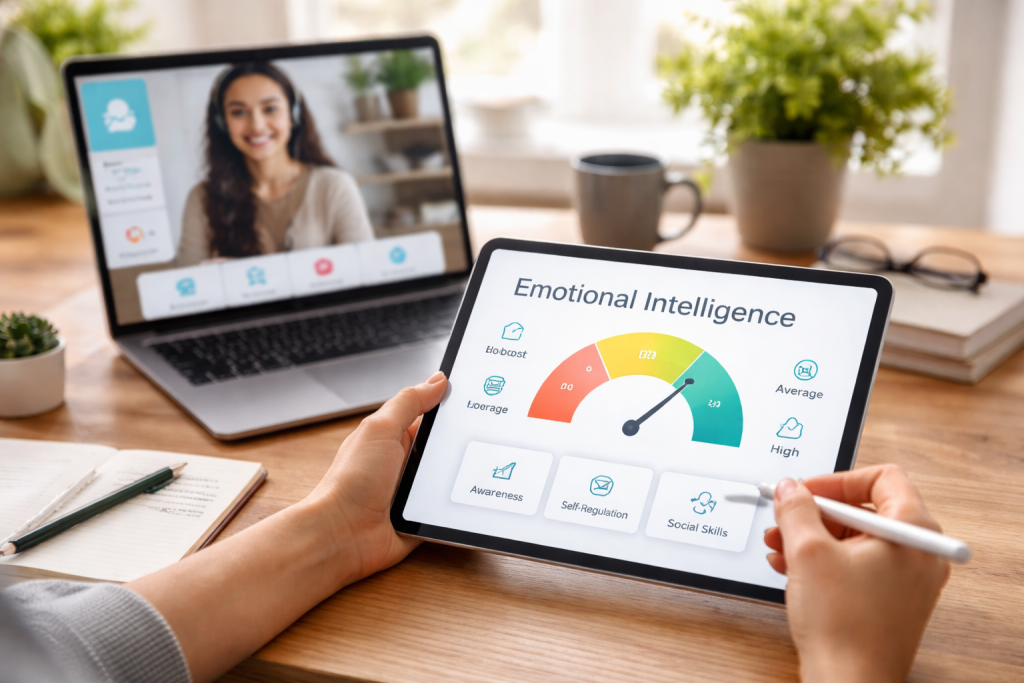
Emotional intelligence, often abbreviated as EQ, is the capacity to understand and manage your emotions and to recognise and influence the emotions of others. It’s a multifaceted attribute that encompasses self-awareness, self-regulation, motivation, empathy, and social skills. Unlike IQ, which tends to remain relatively stable throughout life, EQ is a skill set that can be developed and honed with conscious effort and practice. It’s about being smart with your feelings, not just your thoughts.
Contents
- 1 The Pillars of Emotional Intelligence
- 2 The Interplay of Internal and External Awareness
- 3 Elevating Professional Performance and Leadership
- 4 Cultivating Thriving Personal Relationships
- 5 Enhancing Mental and Emotional Well-being
- 6 Tuning Into Your Inner Dialogue and Bodily Sensations
- 7 Expanding Your Emotional Vocabulary
- 8 Recognizing Your Triggers and Patterns
- 9 The Power of the Pause and Deep Breathing
- 10 Reframing Negative Thoughts and Challenging Cognitive Distortions
- 11 Practicing Mindfulness and Acceptance
- 12 The Art of Active Listening and Non-Verbal Communication
- 13 Developing Perspective-Taking and Compassion
- 14 Navigating Conflict and Building Bridges
- 15 Integrating Self-Reflection into Your Routine
- 16 Applying Empathy in Everyday Interactions
- 17 Using Emotional Intelligence to Enhance Decision-Making
The Pillars of Emotional Intelligence
At its core, emotional intelligence rests upon several interconnected pillars. The first pillar, self-awareness, serves as the foundation for all other aspects of emotional intelligence. It’s the ability to accurately perceive your own emotions, recognise your strengths and weaknesses, and understand how your feelings influence your thoughts and behaviours. Without this fundamental insight, it becomes incredibly challenging to manage your reactions or connect authentically with others. This involves paying attention to subtle emotional cues, understanding your triggers, and acknowledging your personal values and motivations.
Following closely is self-regulation. Once you are aware of your emotions, the next crucial step is to manage them effectively. This doesn’t mean stifling or denying your feelings, but rather learning to control impulsive reactions and express yourself in constructive ways. It’s about channelling your emotions, positive or negative, productively. This might involve taking a pause before responding in anger, processing disappointment without getting bogged down, or channelling excitement into productive action. The ability to regulate emotions is vital for maintaining composure under pressure and making clear-headed decisions.
The Interplay of Internal and External Awareness
Beyond the internal landscape of our own emotions, emotional intelligence extends outwards. Motivation plays a significant role, not in the extrinsic sense of chasing external rewards, but in the intrinsic drive to achieve and persevere. Emotionally intelligent individuals are often driven by a genuine passion for their work and a desire for personal growth, which helps them to overcome obstacles and maintain focus on their goals. This internal compass provides a steady source of energy and commitment.
Furthermore, empathy allows us to understand and share the feelings of others. Empathy is the capacity to empathise with others, perceive the world from their viewpoint, and acknowledge their emotional state, even when it deviates from our own. This is a cornerstone of meaningful human connection and effective collaboration. Empathy fosters compassion, builds trust, and is essential for resolving conflicts and maintaining a sense of belonging.
Finally, social skills are the outward expression of emotional intelligence. This encompasses a range of abilities, including effective communication, active listening, conflict resolution, collaboration, and leadership. These skills enable us to build strong relationships, influence others positively, and navigate social situations with grace and confidence.
The impact of emotional intelligence reverberates through every facet of life, from our personal relationships to our professional careers and our overall mental health. It is not merely a desirable trait; it is increasingly recognised as a crucial determinant of success and a key contributor to a life well-lived.
Elevating Professional Performance and Leadership
Individuals with high EQ consistently demonstrate greater effectiveness in the workplace. They are better communicators, adept at building rapport with colleagues and clients, and skilled at navigating team dynamics. This translates into enhanced productivity, improved problem-solving, and a more positive work environment. Leaders with strong emotional intelligence are particularly valuable; they can inspire and motivate their teams, manage conflict constructively, and create a culture of trust and psychological safety. Such leaders foster loyalty and commitment, which leads to higher retention rates and greater overall organisational success. The ability to understand employee needs and provide support cultivates a more engaged and productive workforce.
Cultivating Thriving Personal Relationships
Beyond the professional sphere, emotional intelligence is the bedrock of healthy and fulfilling personal relationships. It allows us to understand the needs and feelings of our loved ones, to communicate our needs effectively, and to resolve conflicts with mutual respect and understanding. This leads to deeper connections, greater intimacy, and a stronger sense of belonging. When we can empathise with our partners, friends, and families, we are better equipped to offer support, show compassion, and build a shared foundation of trust.
Enhancing Mental and Emotional Well-being
On a personal level, cultivating emotional intelligence is profoundly beneficial for our mental and emotional well-being. By understanding and managing our emotions, we are less likely to be overwhelmed by stress, anxiety, or negativity. We develop greater resilience in the face of adversity and are better equipped to cope with life’s inevitable challenges. This self-mastery allows for greater peace of mind and a more positive outlook on life. The ability to process difficult emotions constructively prevents them from festering and negatively impacting our mental health.
The journey of boosting emotional intelligence begins with a fundamental yet often overlooked skill: the ability to accurately identify your own emotions. Many of us move through life on autopilot, experiencing feelings without truly naming or understanding them. This lack of self-awareness is a significant barrier to managing our emotional landscape effectively.
Tuning Into Your Inner Dialogue and Bodily Sensations
To become more attuned to your emotions, start by paying close attention to your internal experiences. What thoughts are running through your mind? What physical sensations are you experiencing? Often, emotions manifest themselves physically. Are you feeling a tightness in your chest when you’re anxious, a knot in your stomach when you’re nervous, or a warmth spreading through you when you’re happy? Learning to associate these bodily cues with specific emotions is a powerful first step. Similarly, observe the nature of your thoughts. Are they self-critical, fearful, hopeful, or curious? These internal narratives often provide clues to your emotional state.
Expanding Your Emotional Vocabulary
Another key practice is to expand your emotional vocabulary. We often fall back on a limited range of words like “happy”, “sad”, “angry”, and “stressed”. However, emotions are far more nuanced. Instead of just saying you’re “sad,” can you pinpoint whether you feel disappointed, disheartened, melancholy, or grief-stricken? Instead of being “angry,” are you feeling frustrated, irritated, resentful, or furious? The more precisely you can name your emotions, the better you can understand them and their origins. Journaling is a great way to record your feelings and explore the nuances of your emotional experiences.
Recognizing Your Triggers and Patterns
Once you can identify your emotions, the next step is to understand what triggers them. What situations, people, or thoughts consistently lead to particular emotional responses? Identifying these patterns allows you to anticipate potential emotional reactions and develop strategies for managing them before they become overwhelming. For instance, if you consistently feel anxious before public speaking, understanding this trigger allows you to prepare emotionally and mentally for such events, perhaps through relaxation techniques or positive self-talk.
Once you have a firm grasp on identifying your emotions, the critical next step is learning how to manage them effectively. This is where the concept of moving from reaction to response comes into play. A reaction is often an automatic, impulsive, and sometimes unhelpful response to an emotional stimulus. A response, on the other hand, is a more considerate and skilled way of handling your emotions, allowing for greater control and a more positive outcome.
The Power of the Pause and Deep Breathing
One of the most fundamental techniques for managing emotions is “pause.” When you feel a strong emotion welling up, resist the urge to immediately act or speak. Instead, take a moment to pause. This brief interlude can create enough space between the stimulus and your reaction to allow for a more thoughtful response. Coupled with the pause, deep breathing exercises are incredibly effective. Inhaling deeply and exhaling slowly can calm your nervous system, reduce physiological arousal, and bring a sense of equilibrium. Practicing these techniques regularly will make them more accessible when you need them most.
Reframing Negative Thoughts and Challenging Cognitive Distortions
Our thoughts often heavily influence our emotions. Negative or distorted thinking patterns can amplify negative emotions and lead to unhelpful behaviours. Learning to identify and challenge these cognitive distortions is a powerful way to manage your emotions. For example, if you tend to catastrophize— meaning you assume the worst-case scenario will unfold, practice looking for evidence that contradicts this thought. Are there other, more realistic outcomes? By reframing negative thoughts into more balanced and constructive ones, you can shift your emotional state. This process of cognitive restructuring is a cornerstone of many therapeutic approaches and can be a valuable tool for emotional regulation.
Practicing Mindfulness and Acceptance
Mindfulness, the practice of being present in the moment without judgement, is a transformative tool for emotional management. By focusing on the present, you can observe your emotions as they arise and pass, without being swept away by them. Mindfulness teaches you to accept your emotions, even the difficult ones, without resisting them or letting them define you. This acceptance doesn’t mean resignation; it means acknowledging their presence and understanding that they are temporary. This non-judgemental awareness allows you to respond to your emotions with greater clarity and less reactivity.
Emotional intelligence is not solely an internal affair; it is deeply intertwined with our ability to connect with and understand others. Building empathy and honing social skills are essential components of a well-rounded EQ, enabling us to foster stronger relationships and navigate the social world more effectively.
The Art of Active Listening and Non-Verbal Communication
At the heart of empathy lies the ability to truly listen. This goes beyond simply hearing words; it involves actively engaging with the speaker, paying attention to their tone of voice, body language, and facial expressions. Active listening means putting aside your own thoughts and agenda to fully understand the other person’s perspective. It involves asking clarifying questions, reflecting back what you’ve heard, and offering verbal and non-verbal cues that demonstrate your engagement. Non-verbal communication, including eye contact, nodding, and open posture, plays a crucial role in conveying genuine interest and understanding, further bolstering empathetic connection.
Developing Perspective-Taking and Compassion
Developing the skill of perspective-taking significantly enhances empathy. This means consciously attempting to see the world through another person’s eyes, to understand their experiences, motivations, and feelings, even if they differ from your own. It requires setting aside your biases and assumptions and making a genuine effort to comprehend their reality. This practice naturally cultivates compassion, a sense of concern and a desire to help those who are suffering. When you can empathise with someone’s struggles, you are more likely to respond with kindness and support, strengthening your bond.
Strong social skills are vital for healthy relationships, especially when navigating disagreements. Emotionally intelligent individuals approach conflict not as a battle to be won, but as an opportunity for understanding and problem-solving. This involves clear and assertive communication, where you express your needs and feelings respectfully without attacking or blaming the other person. It also entails a willingness to compromise and to find mutually agreeable solutions. By fostering open dialogue and focusing on shared goals, you can de-escalate tensions and build stronger, more resilient relationships, even in the face of differences.
The true power of emotional intelligence lies not just in understanding its principles but in actively integrating them into your everyday life. This involves conscious effort and consistent practice, transforming theoretical knowledge into tangible behavioural changes that enrich your interactions and enhance your well-being.
Integrating Self-Reflection into Your Routine
Make self-reflection a non-negotiable part of your daily or weekly routine. This could involve a few minutes each morning to set intentions for the day or a quiet period in the evening to review your experiences and emotional responses. Consider journaling about your feelings, what went well, and what could have been handled differently. Ask yourself: How did I feel during specific interactions? What triggered those feelings? How did I respond, and could I have responded more effectively? This consistent introspection builds a deeper understanding of your emotional patterns and offers helpful tips for future growth.
Applying Empathy in Everyday Interactions
Actively seek opportunities to practice empathy in your daily interactions. When speaking with colleagues, friends, or family, make a conscious effort to listen attentively, ask open-ended questions, and try to understand their perspective. Even brief moments of mindful engagement can make a significant difference. For example, when someone shares a problem, resist the urge to immediately offer solutions and instead focus on validating their feelings and showing that you understand their experience. This simple act of being present and attentive encourages a sense of community and support.
Using Emotional Intelligence to Enhance Decision-Making
Emotional intelligence plays a crucial role in effective decision-making. Before making important choices, take time to identify your underlying emotions and how they might be influencing your judgement. Are you making a decision based on fear, excitement, or a genuine understanding of the situation? By acknowledging these emotional influences, you can ensure that your decisions are more rational and aligned with your long-term goals. Furthermore, consider the emotional impact of your decisions on others. This holistic approach leads to more balanced and sustainable outcomes, fostering trust and understanding in the process.
Developing emotional intelligence is a continuous journey of self-discovery and growth. By consistently applying these principles, you are not merely acquiring new skills but cultivating a more profound and fulfilling way of living, connecting, and contributing to the world around you.

Fit Text Graphics is the creator of SkillNexy, a platform focused on helping people learn valuable skills and grow in their careers. SkillNexy’s mission is to make skill development simple, practical, and accessible for everyone.