
Think Outside the Box: 5 Techniques to Enhance Your Creativity Skills
The human mind, in its boundless capacity, often finds itself confined by the very structures it creates. To truly thrive in an ever-evolving world, particularly in the face of complex challenges, the ability to “think outside the box” is not merely a desirable trait but an essential skill. This article examines the broad spectrum of creativity, exploring various techniques to cultivate and unleash its immense power, ultimately leading to more innovative and effective problem-solving.
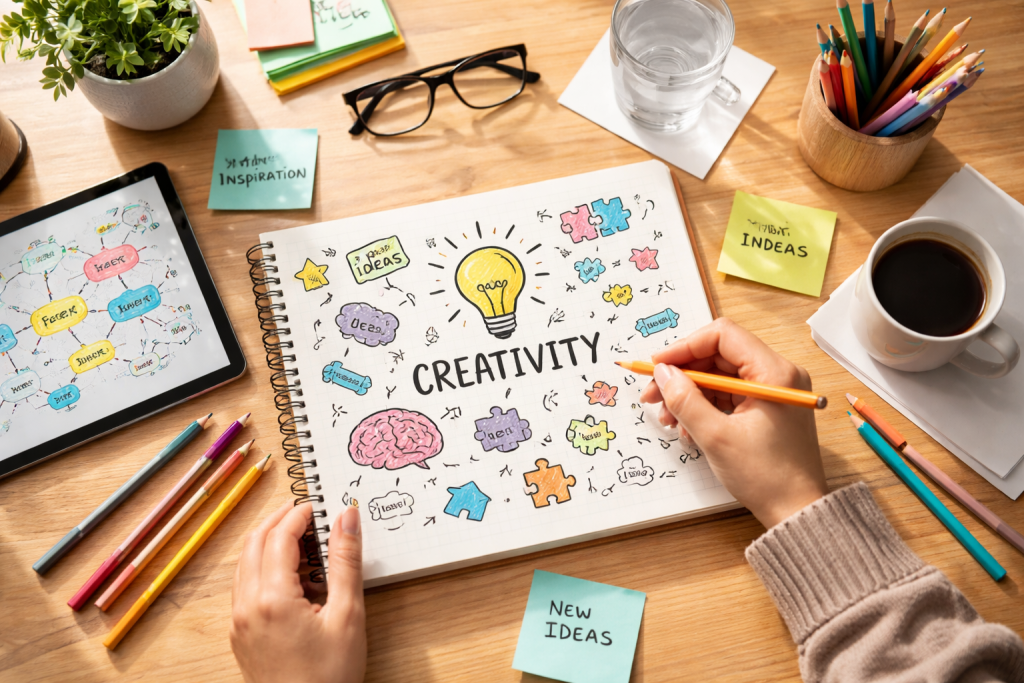
Creativity is far more than an artistic pursuit; it’s the bedrock of progress and the driving force behind meaningful solutions. In a world saturated with information and rapid change, well-trodden paths often lead to predictable and, at times, inadequate outcomes. The ability to envision novel approaches, to connect seemingly disparate ideas, and to challenge established norms is what truly distinguishes effective problem-solvers. Without creativity, we are doomed to repeat past mistakes and miss opportunities for genuine advancement.
Contents
- 1 Beyond Conventional Solutions
- 2 Navigating Ambiguity and Uncertainty
- 3 Breaking Free from Conventional Thinking Patterns
- 4 Embracing Divergent Thinking for Innovative Solutions
- 5 Utilizing Mind Mapping to Generate New Ideas
- 6 Engaging in Brainstorming Sessions for Creative Collaboration
- 7 Experimenting with Different Perspectives and Viewpoints
- 8 Incorporating Play and Imagination into the Creative Process
- 9 Overcoming Mental Blocks and Limiting Beliefs
- 10 Cultivating a Creative Environment for Inspiration and Innovation
Beyond Conventional Solutions
When confronted with a problem, our initial inclination is often to recall past experiences or apply pre-existing frameworks. While this can be efficient for routine issues, it stifles innovation when faced with unprecedented challenges. Creativity allows us to break free from these mental ruts, encouraging us to explore entirely new avenues rather than simply refining existing ones. It’s about questioning the fundamental assumptions and looking for possibilities where others only see limitations. This shift in perspective can transform a deadlock into a breakthrough.
Many problems in the modern world are ill-defined, complex, and fraught with uncertainty. Traditional, linear problem-solving methodologies often struggle in such environments, demanding a more fluid and adaptive approach. Creativity empowers us to embrace ambiguity, to experiment with incomplete information, and to develop solutions that can evolve as new data emerges. It’s about being comfortable with the unknown and seeing it as a space for original thought rather than a barrier.
Cultivating creativity is an ongoing journey that requires conscious effort and the application of diverse techniques. By integrating these practices into our daily lives and professional endeavors, we can significantly enhance our ability to generate fresh perspectives and innovative solutions.
Breaking Free from Conventional Thinking Patterns
One of the most significant barriers to creativity is the ingrained habit of conventional thinking. We are often conditioned to seek logical, sequential answers, which can inadvertently limit our exploration of more imaginative possibilities. The key here is to consciously disrupt these patterns.
Challenging Assumptions and “What If” Scenarios
A powerful method for breaking free is to actively challenge the underlying assumptions of any problem or situation. Ask, “Why do we always do it this way?” or “What if the opposite were true?” This seemingly simple exercise can dismantle long-held beliefs and pave the way for entirely new lines of inquiry. Similarly, engaging in “what if” scenarios pushes us to consider improbable or even impossible situations, forcing our minds to construct novel frameworks for understanding and resolution.
Embracing Beginner’s Mind
Adopting a “beginner’s mind” involves approaching a problem with curiosity and an open mind, as if encountering it for the very first time. This means shedding preconceived notions, expert biases, and the weight of past failures. By suspending judgment and approaching the challenge with fresh eyes, we can often see details and connections that seasoned veterans might overlook. It’s about cultivating a genuine sense of wonder and a willingness to explore without the pressure of finding an immediate, perfect answer.
Embracing Divergent Thinking for Innovative Solutions
Divergent thinking is the engine of creativity, characterized by the ability to generate a wide array of ideas, solutions, and perspectives on a given topic. Unlike convergent thinking, which aims for a single, best answer, divergent thinking celebrates variety and quantity.
Quantity Over Quality in Initial Stages
When engaging in divergent thinking, the primary goal is to produce as many ideas as possible, without immediate concern for their feasibility or practicality. The more ideas generated, the higher the probability of striking upon truly innovative and valuable concepts. This phase is about uninhibited exploration, allowing thoughts to flow freely without the self-censorship that often stifles nascent ideas. It’s an exercise in mental agility, where the goal is simply to fill the canvas with possibilities.
Allowing for the Absurd and Unconventional
True divergent thinking embraces the seemingly absurd and unconventional. Ideas initially dismissed as outlandish have sparked some of the most groundbreaking innovations. We lower internal barriers and encourage our minds to venture into uncharted territory by allowing these “wild” ideas to surface. These unconventional thoughts, even if not directly applicable, can often serve as stepping stones or catalysts for more practical, yet still highly original, solutions.
Utilizing Mind Mapping to Generate New Ideas
Mind mapping is a visual thinking tool that has proven highly effective for organizing thoughts, exploring connections, and rapidly generating new ideas. Its non-linear structure mirrors the brain’s natural associative processes, making it an intuitive and powerful aid for creative exploration.
Visualizing Connections and Relationships
At its core, mind mapping involves placing a central idea or problem in the middle of a page and then branching out with related concepts, keywords, and images. Each branch can further subdivide, creating a web of interconnected thoughts. This visual representation allows us to see relationships and patterns that might not be apparent in a linear list, fostering a deeper understanding of the subject matter and stimulating the generation of novel insights. Its visual nature also aids in retention and recall.
Stimulating Associative Thinking
The free-form nature of mind mapping actively encourages associative thinking. Writing down one idea naturally sparks several others, resulting in a cascade of related concepts. This unconstrained flow of ideas, often aided by the use of different colors, symbols, and doodles, helps to break down mental blocks and bypass the critical filter that can inhibit creativity. It allows the mind to stray and form unexpected connections, often generating truly original ideas.
While individual techniques are crucial, creativity often flourishes in a supportive environment that encourages interaction and diverse perspectives. Collaborative practices and a stimulating setting are vital for sustained creative output.
Engaging in Brainstorming Sessions for Creative Collaboration
Brainstorming, when conducted effectively, is a powerful tool for collective creative generation. It harnesses the combined intellectual power and diverse experiences of multiple individuals to tackle a problem from various angles.
Fostering an Open and Non-Judgmental Space
The cornerstone of a successful brainstorming session is the creation of an open, non-judgmental environment. Participants must feel completely safe to voice any idea, no matter how outlandish, without fear of criticism or ridicule. The emphasis should always be on quantity and enthusiastic expansion of ideas, postponing evaluation until a later stage. A facilitator plays a critical role in maintaining this atmosphere, encouraging participation and ensuring that all voices are heard.
Building on Each Other’s Ideas (Piggybacking)
A key principle of effective brainstorming is the concept of “piggybacking,” where participants actively listen to and build upon the ideas of others. Instead of simply generating new, independent ideas, individuals are encouraged to expand, combine, or modify existing suggestions. This collaborative amplification leads to more sophisticated and nuanced solutions than any single individual might conceive alone. It transforms individual flashes of insight into a richer, collective tapestry of possibilities.
Experimenting with Different Perspectives and Viewpoints
Stepping into someone else’s shoes, metaphorically speaking, can dramatically alter our perception of a problem and unveil innovative solutions. This technique involves consciously adopting different roles or viewpoints to gain new insights.
Role-Playing and Empathy Mapping
Engaging in role-playing, where individuals temporarily assume the identity of a stakeholder, customer, competitor, or even an inanimate object related to the problem, can be incredibly illuminating. This exercise compels us to contemplate motivations, needs, and constraints that we might otherwise overlook. Similarly, empathy mapping involves systematically exploring the “say, think, feel, do” of a target user or stakeholder, fostering a deeper understanding of their experience and needs, which in turn inspires more user-centric and creative solutions.
Seeking Diverse Input and Cross-Pollination of Ideas
Actively seeking input from individuals with diverse backgrounds, expertise, and cultural perspectives can inject fresh thinking into any creative process. Different viewpoints challenge our inherent biases and expose us to alternative ways of framing problems and conceiving solutions. The cross-pollination of ideas from seemingly unrelated fields can often lead to breakthrough innovations. For example, applying principles from biology to engineering problems can unlock entirely new design possibilities.
Incorporating Play and Imagination into the Creative Process
The traditional view of work often sidelines play and imagination, deeming them unproductive. However, these elements are fundamental to fostering genuine creativity and breakthrough thinking.
Doodling, Ideation Games, and Storytelling
Injecting elements of play, such as doodling during meetings, engaging in ideation games, or creating fictional narratives around a problem, can significantly loosen mental constraints and stimulate imaginative leaps. Doodling, for instance, is not a distraction but a cognitive tool that can aid in focus and memory while also fostering non-linear thought. Ideation games provide a structured yet playful approach to generating ideas, often employing constraints or unusual scenarios to provoke novel responses. Storytelling, whether about a problem’s origins or a hypothetical future solution, helps to engage emotional and intuitive faculties, leading to more holistic and imaginative insights.
Stepping Away and Cultivating Mindfulness
Paradoxically, sometimes the best way to solve a problem creatively is to temporarily step away from it. Engaging in activities that promote relaxation, mindfulness, or even just a change of scenery can allow the subconscious mind to work on the problem, often leading to “aha!” moments. Taking a walk, meditating, or engaging in a hobby can clear mental clutter, reduce stress, and create the optimal mental state for unexpected insights to emerge. This intentional disengagement is not procrastination but a crucial part of the creative cycle.
Even with a wealth of techniques, the creative journey is not without its hurdles. Recognizing and overcoming mental blocks and fostering a continually inspiring environment are critical for sustained innovation.
Overcoming Mental Blocks and Limiting Beliefs
Mental blocks are common and can stem from various sources, including fear of failure, perfectionism, or ingrained self-doubt. Addressing these internal barriers is paramount for unlocking full creative potential.
Challenging Self-Imposed Limitations
Many creative blocks are self-imposed, rooted in beliefs about what is possible or permissible. Actively challenging these limiting beliefs by questioning their validity and considering alternative perspectives can be incredibly liberating. Asking “What if I didn’t have this limitation?” or “Who says this stuff isn’t possible?” can help dismantle these internal barriers. It’s about recognizing that perceived limitations are often merely constructs of our minds rather than objective realities.
Embracing Failure as a Learning Opportunity
Fear of failure is one of the most potent inhibitors of creativity. The pursuit of novel solutions inherently carries the risk of unsuccessful attempts. Shifting one’s perspective to view failures not as setbacks but as valuable learning opportunities is crucial. Each “failed” attempt provides data, refines understanding, and points toward more viable paths. Cultivating a mindset where experimentation and iteration are celebrated, even when they don’t immediately lead to success, fosters resilience and encourages bolder creative endeavors.
Cultivating a Creative Environment for Inspiration and Innovation
The physical and psychological environment profoundly impacts our creative capacity. Intentionally designing surroundings that stimulate and support creativity is an ongoing effort.
Designing Spaces that Promote Curiosity and Collaboration
Beyond the intellectual techniques, the physical environment plays a significant role in fostering creativity. Spaces that are visually stimulating, comfortable, and adaptable can encourage informal collaboration and serendipitous idea generation. This might include access to natural light, varied seating arrangements, whiteboards for spontaneous idea capture, and elements that spark curiosity, such as intriguing art, books, or quirky objects. The goal is to create an atmosphere that feels less like a sterile workspace and more like a fertile ground for ideas.
Encouraging a Culture of Experimentation and Risk-Taking
Ultimately, fostering a culture that values and actively encourages experimentation, even if it carries the risk of failure, is essential for sustained creativity. This involves leadership modeling risk-taking, celebrating learning from mistakes, and providing the resources and psychological safety for individuals to explore unconventional ideas. When an organization or even an individual embraces this ethos, creativity ceases to be a sporadic occurrence and becomes an inherent part of its operating system.
In conclusion, thinking creatively is not an innate talent that only a select few possess, but rather a skill that can be learned and developed. By consciously employing techniques that break down conventional thought patterns, embrace divergent thinking, utilize visual tools, foster collaborative environments, and incorporate play, we can significantly enhance our creative prowess. Moreover, by addressing mental blocks and cultivating a supportive ecosystem, we pave the way for a continuous flow of innovation, equipping ourselves to tackle the complex challenges of tomorrow with imagination and ingenuity.

Fit Text Graphics is the creator of SkillNexy, a platform focused on helping people learn valuable skills and grow in their careers. SkillNexy’s mission is to make skill development simple, practical, and accessible for everyone.